Book Your Summer Clinic Now! Enroll Now
Book Your Summer Clinic Now! Enroll Now
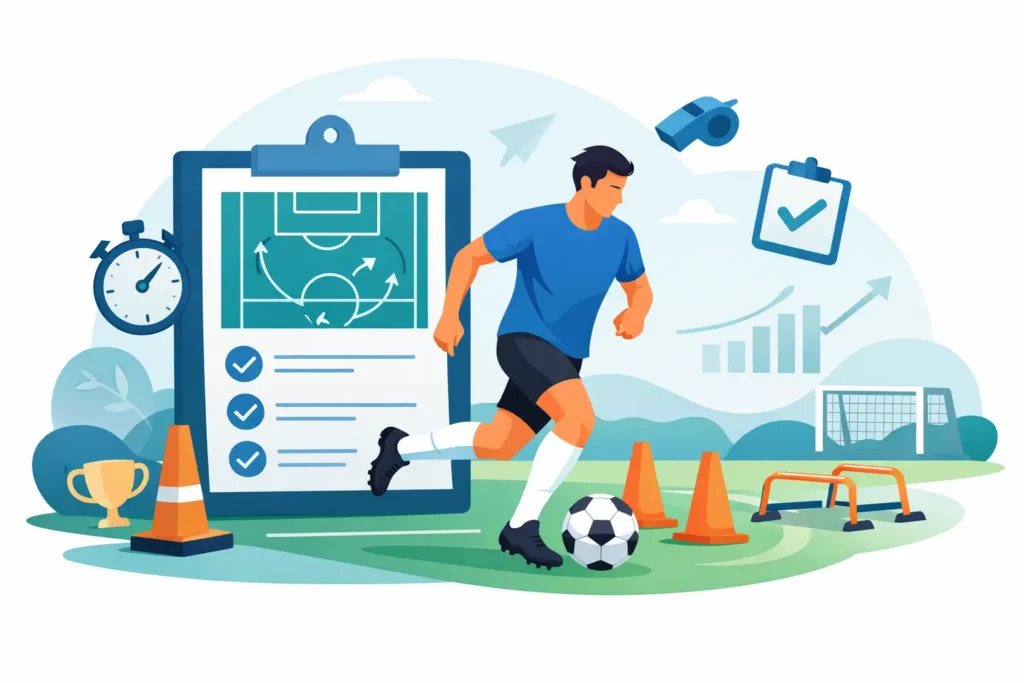
One extra team practice a week usually does not fix a weak first touch, improve decision-making under pressure, or build the confidence a player needs on game day. That is why families start looking for the best individual soccer training program – not for more busywork, but for better development. The right program gives a player focused repetition, honest feedback, and a clear path to improvement that team training alone rarely provides.
The best individual soccer training program is not just a coach with cones and energy. It is a system. Players improve faster when training is built around a plan, not random drills pulled together on the spot.
A strong program starts with evaluation. A coach should be able to identify what a player actually needs, whether that is ball mastery, passing under pressure, finishing technique, speed mechanics, or position-specific movement. Without that starting point, even hard-working players can spend months doing sessions that feel productive but do not change much in games.
From there, structure matters. Good individual training should build skills in layers. A player learns the movement, repeats it correctly, applies it under pressure, and then connects it to real game situations. That process sounds simple because it is simple. The problem is that many players skip steps and end up practicing mistakes.
The best programs also coach details. Body shape, timing, balance, scanning, first touch direction, passing weight, and recovery runs all matter. At a high level, small details separate average players from confident, reliable ones. Younger players need those details taught clearly. Advanced players need those details sharpened consistently.
Team sessions have value. Players need chemistry, tactical understanding, and live competition. But team environments are not built to solve every individual problem.
A coach working with 15 to 20 players cannot stop each rep to correct foot placement on a strike or explain how a midfielder should receive on the half turn. In a team setting, the session has to keep moving. That means players often repeat the same habits, good or bad, without enough correction.
Individual training changes that. Every rep has a purpose. Every correction is immediate. If a player struggles with receiving across the body, the session can stay on that until it improves. If a forward needs cleaner finishing with both feet, the training can emphasize that. If a defender needs better closing angles and recovery speed, the work can be built around those demands.
That is also why confidence grows faster in the right private environment. Confidence does not come from hype. It comes from knowing you have done the work, repeated the skill, and seen yourself improve.
Not every player needs the same type of session. A 9-year-old beginner should not train the same way as a varsity midfielder or a college-bound outside back. Age, level, personality, and goals all matter.
For younger players, the best program usually emphasizes clean technique, coordination, balance, and comfort on the ball. Sessions should be demanding, but they also need to keep the player engaged. If the environment is too rigid too early, players can lose confidence or interest.
For competitive youth and high school players, the focus often shifts toward speed of play, decision-making, fitness, and position-specific habits. This is where many players benefit most from individualized coaching, because the game starts exposing weaknesses faster. A player who looks strong in casual settings may struggle the moment pressure, tempo, and accountability increase.
For elite or advanced players, training has to be even more precise. General technical work still matters, but the margin for improvement is smaller. Sessions should target what actually shows up in competition – sharper movement patterns, cleaner execution at speed, stronger physical output, and better tactical habits tied to the player’s position.
Parents often ask the right first question: will this coach help my child improve? The answer depends on more than credentials, but credentials still matter. A coach with real playing and coaching experience usually sees the game more clearly and recognizes what a player needs sooner.
That said, experience alone is not enough. The best coach for individual training can teach. That means breaking skills down in a way the player understands, correcting mistakes without overcomplicating things, and creating sessions that match the athlete in front of them.
Look for a coach who values repetition with purpose. Look for someone who can explain why a drill matters and how it connects to the game. Look for accountability. Progress is rarely flashy. It usually comes from doing the basics at a high standard over and over again.
It also helps when the program is transparent. Families should understand what the training includes, how often sessions should happen, and what realistic progress looks like. Promises of instant transformation are usually a red flag. Real development takes time, but it should be visible.
Some individual training looks impressive without being effective. Fast footwork ladders, endless cone patterns, and high-energy sessions can create the feeling of progress, but if they are not connected to game actions, the return is limited.
Another common issue is one-size-fits-all training. If every player gets the same session regardless of age, position, or current ability, the program is built for convenience, not development. A striker, center back, and young beginner should not all be doing the same work in the same way.
There is also a balance to strike between intensity and overload. Good sessions should challenge players, but too much volume without enough technical quality can reinforce bad habits. Fatigue has a place in training, but not at the cost of clean execution.
This depends on the player’s schedule, age, level, and goals. For many youth players, one to two focused individual sessions per week can make a real difference when combined with team practices and games. That is often enough to create steady growth without burnout.
For serious competitive players, two to three sessions may be appropriate during key development periods, especially in the offseason or before tryouts. The goal is not to stack as many workouts as possible. The goal is to create enough quality repetition to improve without losing freshness.
Parents should also remember that recovery matters. Sleep, mobility, and smart scheduling are part of development too. More is not always better. Better is better.
The easiest mistake is judging training only by how tired a player feels after the session. Sweat is not the best measure of progress. Performance is.
Ask better questions. Is the player more comfortable receiving under pressure? Are passes cleaner and more consistent? Is the player scanning earlier? Are they winning more 1v1 moments? Do they look more confident in games? Those are meaningful markers.
A good program should improve both skill and transfer. The player should look sharper in training and more effective in matches. If sessions are happening regularly but games look the same after months, something needs to change.
This is where individualized feedback becomes so valuable. When a coach tracks progress closely, players and parents can see what is improving, what still needs work, and what the next phase should be.
Players develop best in an environment that is demanding, clear, and supportive. They need to be pushed, but they also need instruction they can trust. Especially with younger athletes, the relationship between coach and player matters. If the player feels seen, challenged, and coached with purpose, buy-in rises.
That is one reason specialized training businesses like 50/50 Futbol stand out when they are built around direct coaching, structured sessions, and real accountability. Players are not just filling time. They are training within a system designed to help them improve.
Parents feel that difference too. They want to know their child is being coached by someone who understands the game, communicates clearly, and values long-term development over quick sales language. Serious families are not just paying for a session. They are investing in guidance.
Start with the player’s actual needs, not the trendiest option. A young player who needs confidence on the ball may benefit more from simple technical repetition than advanced tactical work. An older player preparing for higher-level competition may need position-specific training and honest correction at game speed.
Then look at the coach, the structure, and the consistency of the program. Ask whether the training is personalized. Ask how progress is evaluated. Ask how the work connects to game performance. If those answers are clear, practical, and player-centered, you are probably looking at the right kind of program.
The best training does not promise magic. It builds skill through repetition, confidence through preparation, and growth through accountability. When a player gets that consistently, improvement stops feeling random and starts becoming expected.
If your goal is real development, choose the program that teaches the basics at a high level, corrects the details that matter, and keeps the player moving forward one quality session at a time.