Book Your Summer Clinic Now! Enroll Now
Book Your Summer Clinic Now! Enroll Now
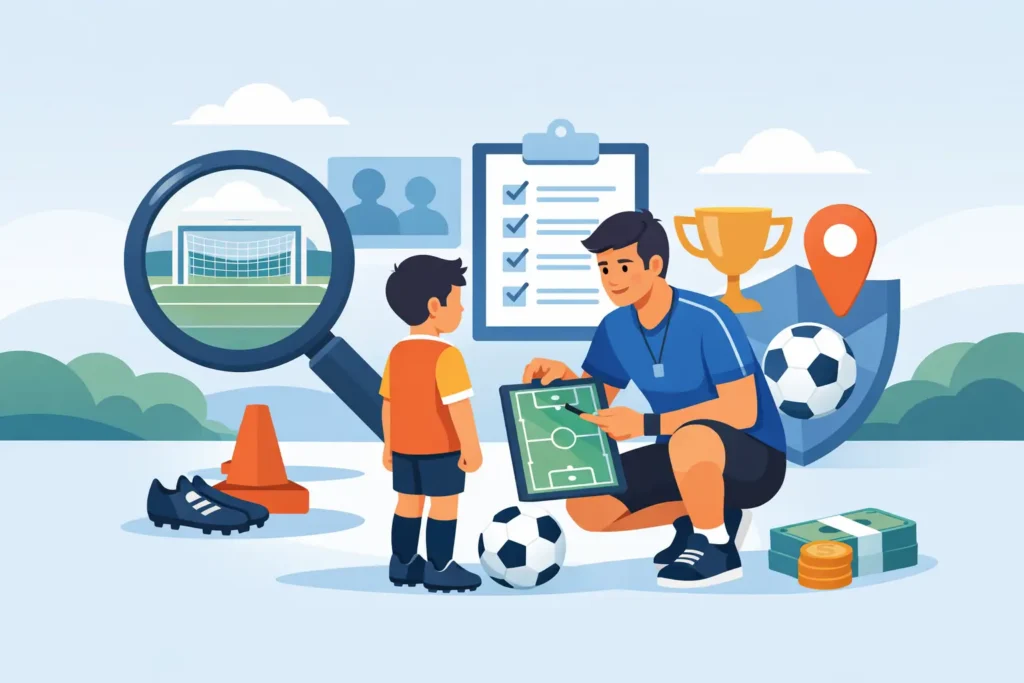
A lot of players train hard and still stay stuck. They go to team practice, play weekend games, and put in effort, but their first touch is still inconsistent, their confidence drops under pressure, or they struggle to translate effort into real improvement. That is usually when families start looking for the best private soccer lessons – not because team training has no value, but because many players need focused repetition, direct feedback, and a plan built around their game.
Private training can be one of the fastest ways to improve, but only if the coaching is right. Not every trainer who can run players through cones can actually teach. Not every former player can break down technique, build confidence, and connect training habits to game performance. If you are investing time and money into extra training, you want sessions that produce clear progress.
The best private soccer lessons are not about making a player tired for an hour. They are about making a player better. That sounds obvious, but there is a difference between a session that feels intense and a session that is structured for development.
A strong lesson has a purpose. Maybe the player needs cleaner passing mechanics, better body shape when receiving, more explosive footwork, sharper finishing, or position-specific work tied to actual game situations. The coach should be able to identify the problem, teach the correction, and repeat it enough that the habit starts to stick.
This is where individualized training matters. In a team environment, coaches have to manage the full group, teach system concepts, and prepare for matches. In private training, the focus shifts to the individual player. That allows for more repetitions, more correction, and more accountability. For many players, that is where confidence starts to grow because they finally understand what they are working on and why.
If you are searching for the best private soccer lessons, start with the coach before you look at anything else. Credentials matter, but how those credentials translate into teaching matters even more.
A credible coach should bring more than energy and enthusiasm. Look for someone with real playing or coaching experience at a high level, but also someone who can simplify the game. The best coaches do not overwhelm young players with too much information. They break technique down into clear details, correct mistakes in real time, and create a session where progress is measurable.
Parents should listen for specific language. A strong coach talks about player development in concrete terms. You should hear things like first touch, decision-making, movement off the ball, balance, striking mechanics, scanning, speed of play, and position-specific demands. Vague promises about getting your child to the next level are not enough.
For serious players, the coach also needs to understand where the athlete is trying to go. Training a beginner is different from training a club starter, a high school player trying to make varsity, or a college athlete preparing for a faster game. Good coaches adjust the session to the level in front of them instead of forcing every player through the same workout.
Improvement in soccer is rarely dramatic from one session to the next. It usually comes from repeating the right movement patterns until they become natural under pressure. That is why quality private training often looks simple from the outside.
A player may spend a large part of a session on first touch, passing angles, directional control, finishing technique, or movement details that seem basic. But basics win games. If the player cannot receive cleanly, strike through the ball consistently, or move with balance and control, advanced tactics will not solve the problem.
The best private soccer lessons respect that reality. They use repetition with purpose. The coach is not just feeding balls endlessly. He is correcting timing, body position, foot placement, tempo, and decision-making. The repetitions are there to build confidence and consistency, not just to fill time.
This can be a hard sell for families who want every session to feel new. But novelty does not always create development. Sometimes the smartest training is doing the same key actions over and over until they hold up in a match.
Private lessons are valuable, but there is some nuance here. The best option depends on the player.
One-on-one training is ideal when a player needs highly targeted technical work, confidence building, or position-specific attention. It is especially effective for correcting habits that have been repeated for years. The coach can stop play, teach the detail, and hold the player accountable every rep.
Semi-private or small-group training can also be excellent, especially for players who benefit from some competition, passing patterns with partners, or more game-like decision-making. Some athletes train better when another player raises the intensity. Others need the full attention of a coach before they are ready for that environment.
That is why the best private soccer lessons are not just about format. They are about fit. A thoughtful coach knows when a player needs individual attention and when a small group can push them forward.
Parents do not need to know every technical term to make a smart decision. But they should ask direct questions.
Ask what the session is designed to improve. Ask how progress is tracked. Ask whether the coach changes the plan based on the player’s age, level, and position. Ask how much instruction versus repetition the player will get. Ask what realistic progress looks like after a month or a package of sessions.
The answers should be clear. If the coach cannot explain his training method in simple terms, that is a problem. Good coaching is not about making things sound complicated. It is about making development clear and repeatable.
It also helps to ask what happens between sessions. Players who improve fastest usually have something to work on outside the lesson, even if it is short. That might mean a ball mastery routine, passing against a wall, finishing reps, mobility work, or simple discipline with touches each day. The lesson should not exist in isolation. It should be part of a development process.
The strongest training environments produce more than sweat. You should see changes in how the player moves, thinks, and carries themselves.
One sign is sharper execution under pressure. A player who once rushed every touch starts receiving with more composure. A player who used to avoid one foot starts using it naturally. A defender reads moments earlier. A forward finishes with better balance. These are the details that change performance.
Another sign is accountability. The player understands what they are working on and takes ownership of it. The best private soccer lessons do not create dependence on the coach. They teach the player how to train, how to focus, and how to recognize their own standards.
Confidence is another marker, but it should be the right kind. Real confidence comes from preparation and repetition, not empty praise. When players know they have put in the work and cleaned up key details, they step onto the field differently.
For families in Palm Beaches and South Florida, convenience matters, but so does consistency. The best program is the one a player can stay committed to over time. If scheduling is difficult, communication is unclear, or the training environment feels disorganized, progress usually stalls.
That is why many families look for a coach who combines high standards with structure and approachability. They want professional-level instruction, but they also want someone who communicates honestly about where the player is and what comes next. That balance matters with younger players and serious athletes alike.
A program like 50/50 Futbol stands out when it combines elite experience with simple, disciplined teaching. That kind of coaching helps beginners build a foundation and gives advanced players the detailed feedback they need to keep progressing.
It is easy to get distracted by flashy drills, social media clips, or promises of quick results. But long-term growth in soccer usually comes from something less glamorous: expert instruction, targeted repetition, honest feedback, and consistent standards.
The best private soccer lessons help players improve in ways that carry over to real matches. They clean up technique, sharpen decision-making, and build confidence through preparation. They also meet the player where they are, whether that means learning basic mechanics or refining high-level details.
If you are choosing training for your child or for yourself, look past the hype. Find a coach who can teach, correct, and build a plan around the individual. The right lesson should make progress feel earned, clear, and sustainable – and that is what keeps players moving forward when the game gets faster and the standard gets higher.